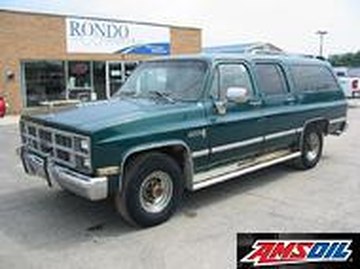
Maintenance Guidance for the 1983 Gmc Trucks Suburban 5.0L
Maintaining a vehicle like the 1983 Gmc Trucks Suburban requires consistent attention to fluid levels and scheduled service intervals to ensure long-term operational stability. Proper lubrication of the engine and transmission is fundamental to preventing premature wear in these mechanical systems.
What transmission fluid does my 1983 Gmc Trucks SUBURBAN 5.0L take?
The following automatic transmission fluids are listed for this vehicle: ATFPK-EA (Signature Series Multi-Vehicle Synthetic Automatic Transmission Fluid), OTFQT-EA (OE Multi-Vehicle Synthetic Automatic Transmission Fluid), ATD1G-EA (Torque-Drive® Synthetic Automatic Transmission Fluid), ATLPK-EA (Signature Series Fuel-Efficient Synthetic Automatic Transmission Fluid), and OTLQT-EA (OE Fuel-Efficient Synthetic Automatic Transmission Fluid).
Engine Oil Lubrication Fundamentals
The engine relies on a consistent supply of clean oil to reduce friction between moving internal components. For this 1983 Gmc Trucks Suburban with the 5.0L engine, the database allows for the use of 10W-30 engine oil. Maintaining the correct viscosity is essential for ensuring that the oil can flow effectively through the engine galleries during startup and provide adequate film strength during operation.
Regularly checking the oil level using the engine dipstick is a primary maintenance task. Low oil levels can lead to increased heat and metal-on-metal contact, which may cause significant internal damage. It is advisable to check the level when the vehicle is parked on level ground and the engine is cool or has been allowed to settle after running.
Monitoring Fluid Condition and Color
Beyond simply checking the quantity of fluids, observing their physical condition can provide insight into the health of your vehicle's systems. Engine oil should be checked for consistency; if it appears excessively thick, gritty, or contains visible debris, it may indicate internal engine issues or that the oil has exceeded its service life.
Similarly, transmission fluid color is a useful diagnostic tool. While specific colors can vary by product, a significant change in appearance or the presence of a burnt odor can suggest that the fluid is no longer providing the necessary thermal or lubricative properties. If you notice discoloration, consult your owner's manual for recommended inspection procedures.
Managing Service Intervals
To keep the 5.0L engine performing as intended, you must adhere to a regular maintenance schedule. Because specific mileage or time intervals are not provided in this technical record, you should follow the manufacturer's maintenance schedule found in your owner's manual.
Following these prescribed intervals helps ensure that oil filters are replaced and fresh lubricants are introduced before contaminants can accumulate. Neglecting these schedules can lead to the buildup of sludge and carbon deposits, which can impede the movement of critical engine parts.
The Role of the Oil Filter
Every time the engine oil is changed, the oil filter should be addressed. The filter's job is to capture microscopic particles and contaminants that are suspended in the oil during the lubrication process. A clogged or restricted filter can impede oil flow, potentially starving critical components of lubrication.
When performing an oil service, ensure that the new filter is seated correctly according to standard mechanical practices. Using a filter that matches the requirements for your specific engine configuration ensures that the filtration media can effectively manage the debris generated during normal combustion and mechanical operation.
General Fluid Maintenance Best Practices
A comprehensive maintenance approach involves more than just focusing on the engine. While the transmission fluid is vital for gear transitions, other fluids in the vehicle also require periodic inspection. This includes checking for leaks around gaskets, seals, and hoses that connect various fluid reservoirs to their respective components.
Keeping the area around the engine bay clean can make it easier to spot new leaks early. A small drip on a driveway or a damp spot on an engine component is often the first sign of a failing seal or a loose connection. Addressing these minor issues promptly can prevent larger, more expensive mechanical failures later.
BUYING ENGINE OIL
When you are ready to purchase lubrication for your vehicle, ensure you select the 10W-30 viscosity listed for this application. Always verify that the product packaging explicitly matches your engine requirements. It is helpful to have your vehicle information, including the year, make, and engine size, available when shopping to ensure you select a product that meets the necessary standards for your 1983 Gmc Trucks Suburban.